Showing posts with label John Diefenbaker. Show all posts

Saturday, October 16, 2010

Canada Stands Tall

Canada Stands Tall: In Spite of Liberalism
Premier Brad Wall PM Stephen Harper Diefenbaker Canada Centre U of S 
 
“Never has such a torrent of abuse been poured on any Canadian figure as that during the years from 1960 to 1965. Never have the wealthy and the clever been so united as they were in their joint attack on Mr. John Diefenbaker”.- George Grant, Lament for a Nation
The turn from Diefenbaker to Pearson-Kennedy was a turn from a unique and indigenous Canadian nationalist way to the American liberal and imperial way. - George Grant, Lament for a Nation
The 1963 election was fought on the issue of whether Canada would take warheads for Bomarc missiles. Pearson, following Kennedy, said we should and would. Diefenbaker, much to the anger and chagrin of many in his party, said a defiant and firm No to Kennedy’s orders. This was just the tip of the iceberg, though. Diebenbaker had, again and again, opposed and thwarted Kennedy’s plans for Canada. Diefenbaker had questioned the way Kennedy had handled the Cuban missile crises, he had initiated trade ties with Cuba and China when Kennedy had put a trade embargo on them, and he refused to join the Organization of American States (a front for American interests in Latin America). 
In short, Diefenbaker, as a conservative, locked horns with Kennedy’s liberalism each step of the way. Grant makes all this quite clear. If Diefenbaker had merely wanted power, he would, like Pearson, have dutifully genuflected to Kennedy. He didn’t, and he paid the price for doing so. - Ron Dart Clarion Journal, book review of Lament for a Nation
“The overriding theme from 1989 to 2004 is one of decline,” Greenhill writes, “decline in our reputation and relevance with the United States, decline in our leadership role in development, and decline in the international significance of our peacekeeping and other international security activities.” Only two Canadian leaders were identified as having made a difference on the world stage: Brian Mulroney, who leveraged his influence with the US onto the multilateral agenda, and Lloyd Axworthy, for his promotion of a human security agenda.- THE DECLINE OF CANADA’S INFLUENCE IN THE WORLD — WHAT IS TO BE DONE FOR IT?
My name is Bono and I'm a Rock Star?

Celebrity Photo Op - Bono, the front-man of rock-band U2, has come under fire after it was revealed by the New York Post that his anti-poverty foundation, 'One', gives only one per-cent of its funds to charity. The non-profit organization was set up to by the 50-year old, and received almost 15 million in donations in 2008, however, the newspaper reports that only 190,000 of that figure was donated to good causes.  Funny thing about celebrity endorsements from limousines liberals -Karma.
PM Paul Martin
This winter, as the government drafts its new foreign policy, it must think more broadly and ambitiously, considering interests more than values. It must be about hard power more than soft power — a real military, a real aid program and a real foreign service, with the resources each of them needs. Defence spending in Canada has now fallen to one percent of Canada’s gross domestic product, far less than NATO expects of its members. Aid in Canada is about 0.28 percent of GDP, a little more than half of what it was 30 years ago and a little more than a third of the international standard set by a blue-ribbon panel chaired by Lester Pearson and other luminarites in 1969. The foreign service is being re-organized, but it needs more money, too. The three D’s? Canada will have to struggle mightily to ensure that they no longer mean disarmament, disinvestment
and disinterest.There is no magic: it is about money. Martin will have to match rhetoric and resources, doing what this government and previous governments have been unable to do in recent years in imagining Canada and the world. -MARTIN’S FIRST YEAR ON FOREIGN POLICY — THE RHETORIC OF GOOD INTENTIONS
This minority parliament led by a Conservative Prime Minister has weathered a global recession the best in the developed economies.  Canada is once again punching above her weight on the global stage. As expected in every government critics will look to the "golden age" of diplomacy and try to invoke a nostalgia that was not sustainable.
PM Stephen Harper Laureen, Hong Kong
The government of Canada led by our PM Stephen Harper is not afraid to be raise human right abuses in China. Conservatives have a tradition with Progress Conservative PM Mackenzie King fighting to remove South Africa in the Commonwealth for its racist treatment of it black citizens.  *(edited poster noted mistake)
At the Prime Ministers’ Conference in 1961, Verwoerd formally applied for South Africa to remain in the Commonwealth. The prime ministers were divided. Diefenbaker broke the deadlock by proposing that the conference not reject South Africa’s application, but instead states in a communiqué that racial equality was a principle of the Commonwealth. This was adopted, although Britain and New Zealand disagreed with Diefenbaker’s proposal. South Africa could not accept the communiqué. At that conference, the Afro Asians commanded six of the eleven votes, but it was not necessary for Nigeria, Malaya, Ceylon, India and Pakistan to cast their votes. South Africa withdrew its application and exits the Commonwealth.
According to Peter Newman, this was “Diefenbaker’s most important contribution to international politics … Diefenbaker flew home, a hero.”
Progressive Conservative PM Brian Mulroney continued the fight and won sanctions against South Africa.
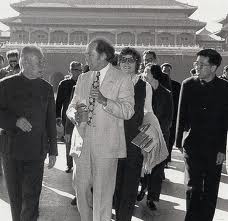
PM Pierre Trudeau
I first worked with him in 1966 when he was a member of the Canadian Delegation to the U.N. General Assembly and became so annoyed about our instructions on dealing with South Africa that he declined to deliver them
(I had to) What were to instructions in 1966 to South Africa that Pierre was reluctant to deliver?
Diplomat and politician Lester Pearson won the...
PM Lester Pearson
The fact is that the Trudeau review did reflect a significant change of emphasis in our foreign policy toward realism and away from the honest-broker or save the-world role. Not surprisingly, Lester Pearson was unhappy about the review in that it failed to make the pursuit of peace and security Canada’s highest priority.
 
In recent months, Canada has been standing taller on the international stage. Taller than what? Well, taller than before. And taller than a number of countries whose profile has been shrinking of late, thanks to their economic profligacy.

But there are a number of factors contributing to our enlarged image, including our Prime Minister’s disciplined stewardship of two international summits and the performance of our economy, our banks and our currency. At home, Stephen Harper is seen as a leader who is introducing significant shifts in our foreign policy. Relations with China and India, marked by important state visits, have become a high priority.
Canadian leadership is being shown in favour of international fiscal sobriety, global initiatives have been undertaken on behalf of women and children and a free-trade agreement with Europe has been launched.- Not just another foreign-policy review
Liberal-Democrats will scrap our F35 program and repeat Sea King fiasco
Do we want to be led by a Liberal?
or 
Do we develop our own national voice with a real military?

Enhanced by Zemanta

Friday, August 27, 2010

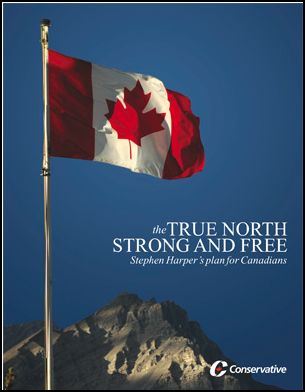
PM Stephen Harper Prioritizes North


 PM Stephen Harper is retracing the plan of a previous PM who believed in a strong united Canada. Will Canadians embrace him as they did PM John G. Diefenbaker in 1958?

Statue of John Diefenbaker on Parliament Hill,...The 1958 election campaign saw a huge outpouring of public support for the Progressive Conservatives. At the opening campaign rally in Winnipeg on February 12, voters filled the hall until the doors had to be closed for safety reasons. They were promptly broken down by the crowd outside.[88] At the rally, Diefenbaker called for "[a] new vision. A new hope. A new soul for Canada."[89] He pledged to open the Canadian North, to seek out its resources and make it a place for settlements.[88] The conclusion to his speech expounded on what became known as "The Vision",
This is the vision: One Canada. One Canada, where Canadians will have preserved to them the control of their own economic and political destiny. Sir John A. Macdonald saw a Canada from east to west: he opened the west. I see a new Canada—a Canada of the North. This is the vision![90]
Pierre Sévigny, who would be elected an MP in 1958, recalled the gathering, "When he had finished that speech, as he was walking to the door, I saw people kneel and kiss his coat. Not one, but many. People were in tears. People were delirious. And this happened many a time after."[91] When Sévigny introduced Diefenbaker to a Montreal rally with the words "Levez-vous, levez-vous, saluez votre chef!" (Rise, rise, salute your chief!) according to Postmaster General William Hamilton "thousands and thousands of people, jammed into that auditorium, just tore the roof off in a frenzy".[92] Michael Starr remembered, "That was the most fantastic election ... I went into little places. Smoky Lake, Alberta, where nobody ever saw a minister. Canora, Saskatchewan. Every meeting was jammed ... The halls would be filled with people and sitting there in the front would be the first Ukrainian immigrants with shawls and hands gnarled from work ... I would switch to Ukrainian and the tears would start to run down their faces ... I don't care who says what won the election; it was the emotional aspect that really caught on."[93]


Who Owns The Arctic

John Diefenbaker's Northern Vision


"A New Vision" speech by John G. Diefenbaker at the Civic Auditorium, Winnipeg, 12 February 1958
Ladies and gentlemen, we started in the last few months, since June the 10th, to carry out our promises, and I can tell you this, that as long as I am Prime Minister of this country, the welfare of the average Canadian will not be forgotten. We intend to launch for the future, we have laid the foundations now, the long-range objectives of this party. We ask from you a mandate; a new and a stronger mandate, to pursue the planning and to carry to fruition our new national development programme for Canada. For years we raised that in the House of Commons, and those in authority ridiculed it. Day before yesterday, Mr. Pearson came out in favour of a national development policy. Why didn't they do it when they were in power?
This national development policy will create a new sense of national purpose and national destiny. One Canada. One Canada, wherein Canadians will have preserved to them the control of their own economic and political destiny. Sir John A. MacDonald gave his life to this party. He opened the West. He saw Canada from East to West. I see a new Canada - a Canada of the North. What are these new principles? What are our objectives? What do we propose? We propose to assist the provinces, with their co-operation, in the financing and construction of job-creating projects necessary for the new development, where such projects are beyond the resources of the provinces. We will assist the provinces with their cooperation in the conservation of the renewable natural resources. We will aid in projects which are self-liquidating. We will aid in projects which, while not self-liquidating will lead to the development of the national resources for the opening of Canada's northland. We will open that northland for development by improving transportation and communication and by the development of power, by the building of access roads. We will make an inventory of our hydroelectric potential.
Ladies and gentlemen, we now intend to bring in legislation to encourage progressively increasing processing of our domestic raw materials in Canada, rather than shipping them out in raw material form. We will ensure that Canada's national resources are used to benefit Canadians and that Canadians have an opportunity to participate in Canada's development. We have not discouraged foreign investment, but we will encourage the partnership of the foreign investors with the Canadian people....
Canadians, realize your opportunities! This is only the beginning. The future programme for the next five to seven years under a Progressive Conservative Government is one that is calculated to give young Canadians, motivated by a desire to serve, a lift in the heart, faith in Canada's future, faith in her destiny. We will extend aid to economically sound railway projects, such as the Pine Point Railroad to Great Slave Lake. That was promised day before yesterday in the Liberal platform. Why didn't they do it then?
Yes, we will press for hydroelectric development of the Columbia River, which now awaits completion of an agreement with the United States. I mentioned the South Saskatchewan. These are the plans.
This is the message I give to you my fellow Canadians, not one of defeatism. Jobs! Jobs for hundreds of thousands of Canadian people. A new vision! A new hope! A new soul for Canada.
As far as the Arctic is concerned, how many of you here knew the pioneers in Western Canada. I saw the early days here. Here in Winnipeg in 1909, when the vast movement was taking place into the Western plains, they had imagination. There is a new imagination now. The Arctic. We intend to carry out the legislative programme of Arctic research, to develop Arctic routes, to develop those vast hidden resources the last few years have revealed. Plans to improve the St. Lawrence and the Hudson Bay route. Plans to increase self-government in the Yukon and Northwest Territories. We can see one or two provinces there.
Taxation adjustments to place Canadians on a more equal footing with foreign investors. Encourage foreign investors to make equity stock available to Canadians for purchase, to appoint Canadians to executive positions, to deny the present plan of certain American companies that do not give to Canadian plants their fair share of the export business. Those are some of the things we want to do.
It is for those things that I ask a mandate, not giving you tonight the whole picture at all, by any means but giving you something of the vision as I see it. The reason that I appeal to the Canadian people, a mandate for a clear majority. You set a pace for Manitoba last time. Give us a few more, this.
We need a clear majority to carry out this long-range plan, this great design, this blueprint for the Canada which her resources make possible.
I want to see Canadians given a transcending sense of national purpose, such as MacDonald gave in his day. To safeguard our independence, restore our unity, a policy that will scrupulously respect the rights of the provinces, and at the same time build for the achievement of that one Canada, is the major reason why 35 of our 119 members in the House of Commons are sufficiently young to belong to the Young Progressive Conservatives. They caught that vision. I am not here to condemn others. I am here for the purpose, as a Canadian, to give you a picture of the kind of Canada the long-range plans that we have in mind will bring about....
This party has become the party of national destiny. I hope it will be the party of vision and courage. The party of one Canada, with equal opportunities to all. The only party that can give to youth an Elizabethan sense of grand design - that's my challenge. The faith to venture with enthusiasm to the frontiers of a nation; that faith, that assurance that will be provided with a government strong enough to implement plans for development. To the young men and women of this nation I say, Canada is within your hands. Adventure. Adventure to the nation's utmost bounds, to strive, to seek, to find, and not to yield. The policies that will be placed before the people of Canada in this campaign will be ones that will ensure that today and this century will belong to Canada. The destination is one Canada. To that end I dedicate this party.


Prime Minister Rt. Hon. John G. Diefenbaker, s...Image via Wikipedia
High modernism in the Arctic: planning Frobisher Bay and Inuvik

 
Prime Minister John Diefenbaker at the officia...Image via Wikipedia
If Frobisher and Inuvik were, as the Inuvik plaque reads, designed to provide the ‘normal facilities of a Canadian town’, the much smaller DEW Line stations, scattered from Alaska to Greenland, were also normalizing spaces, where southern workers on a six-month or year-long tour could enjoy familiar food, movies, and other comforts, in an attempt to distract them from the harsh difference of the Arctic environment and the psychological and physiological challenges that this contrast presented. Although DEW communities tended to be very small, the Line still had profound  consequences for the geography of settlement across the Arctic, as nativenortherners (overwhelmingly men) flocked to radar sites in search of paid work.137 In a hamlet like Tuktoyaktuk, a short distance from Inuvik, where the population is about 800, and where an upgraded North Warning System station still stands on the original DEW Line land, nearly every resident can list several family members, dating back two or three generations, who were associated in some way with Arctic radar construction and operation. A 1966 report described a decade-long transition in Tuktoyaktuk from an economy based on ‘hunting, fishing and trapping to one of wage employment’.138


Inuvik Region, Northwest Territories, Canada (...Image via Wikipedia
 In a 1983 Canadian Broadcasting Corporation (CBC) radio interview marking Inuvik’s 25th anniversary, Gordon Robertson acknowledged the presence of segregation, but attributed it to an ‘economic accident’, even as he defended the original desire to construct a modern community free of division. His fellow interviewee Eric Nielsen, a longtime Yukon Member of Parliament, added that ‘mistakes were made because southern Canadians were making the decisions’.108


Enhanced by Zemanta