Showing posts with label Prime Minister of Canada. Show all posts

Saturday, October 16, 2010

Canada Stands Tall

Canada Stands Tall: In Spite of Liberalism
Premier Brad Wall PM Stephen Harper Diefenbaker Canada Centre U of S 
 
“Never has such a torrent of abuse been poured on any Canadian figure as that during the years from 1960 to 1965. Never have the wealthy and the clever been so united as they were in their joint attack on Mr. John Diefenbaker”.- George Grant, Lament for a Nation
The turn from Diefenbaker to Pearson-Kennedy was a turn from a unique and indigenous Canadian nationalist way to the American liberal and imperial way. - George Grant, Lament for a Nation
The 1963 election was fought on the issue of whether Canada would take warheads for Bomarc missiles. Pearson, following Kennedy, said we should and would. Diefenbaker, much to the anger and chagrin of many in his party, said a defiant and firm No to Kennedy’s orders. This was just the tip of the iceberg, though. Diebenbaker had, again and again, opposed and thwarted Kennedy’s plans for Canada. Diefenbaker had questioned the way Kennedy had handled the Cuban missile crises, he had initiated trade ties with Cuba and China when Kennedy had put a trade embargo on them, and he refused to join the Organization of American States (a front for American interests in Latin America). 
In short, Diefenbaker, as a conservative, locked horns with Kennedy’s liberalism each step of the way. Grant makes all this quite clear. If Diefenbaker had merely wanted power, he would, like Pearson, have dutifully genuflected to Kennedy. He didn’t, and he paid the price for doing so. - Ron Dart Clarion Journal, book review of Lament for a Nation
“The overriding theme from 1989 to 2004 is one of decline,” Greenhill writes, “decline in our reputation and relevance with the United States, decline in our leadership role in development, and decline in the international significance of our peacekeeping and other international security activities.” Only two Canadian leaders were identified as having made a difference on the world stage: Brian Mulroney, who leveraged his influence with the US onto the multilateral agenda, and Lloyd Axworthy, for his promotion of a human security agenda.- THE DECLINE OF CANADA’S INFLUENCE IN THE WORLD — WHAT IS TO BE DONE FOR IT?
My name is Bono and I'm a Rock Star?

Celebrity Photo Op - Bono, the front-man of rock-band U2, has come under fire after it was revealed by the New York Post that his anti-poverty foundation, 'One', gives only one per-cent of its funds to charity. The non-profit organization was set up to by the 50-year old, and received almost 15 million in donations in 2008, however, the newspaper reports that only 190,000 of that figure was donated to good causes.  Funny thing about celebrity endorsements from limousines liberals -Karma.
PM Paul Martin
This winter, as the government drafts its new foreign policy, it must think more broadly and ambitiously, considering interests more than values. It must be about hard power more than soft power — a real military, a real aid program and a real foreign service, with the resources each of them needs. Defence spending in Canada has now fallen to one percent of Canada’s gross domestic product, far less than NATO expects of its members. Aid in Canada is about 0.28 percent of GDP, a little more than half of what it was 30 years ago and a little more than a third of the international standard set by a blue-ribbon panel chaired by Lester Pearson and other luminarites in 1969. The foreign service is being re-organized, but it needs more money, too. The three D’s? Canada will have to struggle mightily to ensure that they no longer mean disarmament, disinvestment
and disinterest.There is no magic: it is about money. Martin will have to match rhetoric and resources, doing what this government and previous governments have been unable to do in recent years in imagining Canada and the world. -MARTIN’S FIRST YEAR ON FOREIGN POLICY — THE RHETORIC OF GOOD INTENTIONS
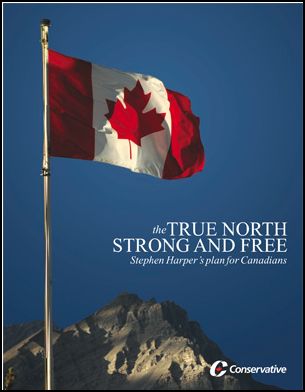
This minority parliament led by a Conservative Prime Minister has weathered a global recession the best in the developed economies.  Canada is once again punching above her weight on the global stage. As expected in every government critics will look to the "golden age" of diplomacy and try to invoke a nostalgia that was not sustainable.
PM Stephen Harper Laureen, Hong Kong
The government of Canada led by our PM Stephen Harper is not afraid to be raise human right abuses in China. Conservatives have a tradition with Progress Conservative PM Mackenzie King fighting to remove South Africa in the Commonwealth for its racist treatment of it black citizens.  *(edited poster noted mistake)
At the Prime Ministers’ Conference in 1961, Verwoerd formally applied for South Africa to remain in the Commonwealth. The prime ministers were divided. Diefenbaker broke the deadlock by proposing that the conference not reject South Africa’s application, but instead states in a communiqué that racial equality was a principle of the Commonwealth. This was adopted, although Britain and New Zealand disagreed with Diefenbaker’s proposal. South Africa could not accept the communiqué. At that conference, the Afro Asians commanded six of the eleven votes, but it was not necessary for Nigeria, Malaya, Ceylon, India and Pakistan to cast their votes. South Africa withdrew its application and exits the Commonwealth.
According to Peter Newman, this was “Diefenbaker’s most important contribution to international politics … Diefenbaker flew home, a hero.”
Progressive Conservative PM Brian Mulroney continued the fight and won sanctions against South Africa.
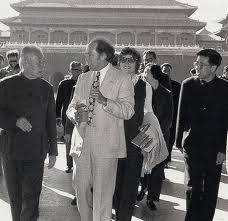
PM Pierre Trudeau
I first worked with him in 1966 when he was a member of the Canadian Delegation to the U.N. General Assembly and became so annoyed about our instructions on dealing with South Africa that he declined to deliver them
(I had to) What were to instructions in 1966 to South Africa that Pierre was reluctant to deliver?
Diplomat and politician Lester Pearson won the...
PM Lester Pearson
The fact is that the Trudeau review did reflect a significant change of emphasis in our foreign policy toward realism and away from the honest-broker or save the-world role. Not surprisingly, Lester Pearson was unhappy about the review in that it failed to make the pursuit of peace and security Canada’s highest priority.
 
In recent months, Canada has been standing taller on the international stage. Taller than what? Well, taller than before. And taller than a number of countries whose profile has been shrinking of late, thanks to their economic profligacy.

But there are a number of factors contributing to our enlarged image, including our Prime Minister’s disciplined stewardship of two international summits and the performance of our economy, our banks and our currency. At home, Stephen Harper is seen as a leader who is introducing significant shifts in our foreign policy. Relations with China and India, marked by important state visits, have become a high priority.
Canadian leadership is being shown in favour of international fiscal sobriety, global initiatives have been undertaken on behalf of women and children and a free-trade agreement with Europe has been launched.- Not just another foreign-policy review
Liberal-Democrats will scrap our F35 program and repeat Sea King fiasco
Do we want to be led by a Liberal?
or 
Do we develop our own national voice with a real military?

Enhanced by Zemanta

Friday, August 27, 2010

PM Stephen Harper Prioritizes North


 PM Stephen Harper is retracing the plan of a previous PM who believed in a strong united Canada. Will Canadians embrace him as they did PM John G. Diefenbaker in 1958?

Statue of John Diefenbaker on Parliament Hill,...The 1958 election campaign saw a huge outpouring of public support for the Progressive Conservatives. At the opening campaign rally in Winnipeg on February 12, voters filled the hall until the doors had to be closed for safety reasons. They were promptly broken down by the crowd outside.[88] At the rally, Diefenbaker called for "[a] new vision. A new hope. A new soul for Canada."[89] He pledged to open the Canadian North, to seek out its resources and make it a place for settlements.[88] The conclusion to his speech expounded on what became known as "The Vision",
This is the vision: One Canada. One Canada, where Canadians will have preserved to them the control of their own economic and political destiny. Sir John A. Macdonald saw a Canada from east to west: he opened the west. I see a new Canada—a Canada of the North. This is the vision![90]
Pierre Sévigny, who would be elected an MP in 1958, recalled the gathering, "When he had finished that speech, as he was walking to the door, I saw people kneel and kiss his coat. Not one, but many. People were in tears. People were delirious. And this happened many a time after."[91] When Sévigny introduced Diefenbaker to a Montreal rally with the words "Levez-vous, levez-vous, saluez votre chef!" (Rise, rise, salute your chief!) according to Postmaster General William Hamilton "thousands and thousands of people, jammed into that auditorium, just tore the roof off in a frenzy".[92] Michael Starr remembered, "That was the most fantastic election ... I went into little places. Smoky Lake, Alberta, where nobody ever saw a minister. Canora, Saskatchewan. Every meeting was jammed ... The halls would be filled with people and sitting there in the front would be the first Ukrainian immigrants with shawls and hands gnarled from work ... I would switch to Ukrainian and the tears would start to run down their faces ... I don't care who says what won the election; it was the emotional aspect that really caught on."[93]


Who Owns The Arctic

John Diefenbaker's Northern Vision


"A New Vision" speech by John G. Diefenbaker at the Civic Auditorium, Winnipeg, 12 February 1958
Ladies and gentlemen, we started in the last few months, since June the 10th, to carry out our promises, and I can tell you this, that as long as I am Prime Minister of this country, the welfare of the average Canadian will not be forgotten. We intend to launch for the future, we have laid the foundations now, the long-range objectives of this party. We ask from you a mandate; a new and a stronger mandate, to pursue the planning and to carry to fruition our new national development programme for Canada. For years we raised that in the House of Commons, and those in authority ridiculed it. Day before yesterday, Mr. Pearson came out in favour of a national development policy. Why didn't they do it when they were in power?
This national development policy will create a new sense of national purpose and national destiny. One Canada. One Canada, wherein Canadians will have preserved to them the control of their own economic and political destiny. Sir John A. MacDonald gave his life to this party. He opened the West. He saw Canada from East to West. I see a new Canada - a Canada of the North. What are these new principles? What are our objectives? What do we propose? We propose to assist the provinces, with their co-operation, in the financing and construction of job-creating projects necessary for the new development, where such projects are beyond the resources of the provinces. We will assist the provinces with their cooperation in the conservation of the renewable natural resources. We will aid in projects which are self-liquidating. We will aid in projects which, while not self-liquidating will lead to the development of the national resources for the opening of Canada's northland. We will open that northland for development by improving transportation and communication and by the development of power, by the building of access roads. We will make an inventory of our hydroelectric potential.
Ladies and gentlemen, we now intend to bring in legislation to encourage progressively increasing processing of our domestic raw materials in Canada, rather than shipping them out in raw material form. We will ensure that Canada's national resources are used to benefit Canadians and that Canadians have an opportunity to participate in Canada's development. We have not discouraged foreign investment, but we will encourage the partnership of the foreign investors with the Canadian people....
Canadians, realize your opportunities! This is only the beginning. The future programme for the next five to seven years under a Progressive Conservative Government is one that is calculated to give young Canadians, motivated by a desire to serve, a lift in the heart, faith in Canada's future, faith in her destiny. We will extend aid to economically sound railway projects, such as the Pine Point Railroad to Great Slave Lake. That was promised day before yesterday in the Liberal platform. Why didn't they do it then?
Yes, we will press for hydroelectric development of the Columbia River, which now awaits completion of an agreement with the United States. I mentioned the South Saskatchewan. These are the plans.
This is the message I give to you my fellow Canadians, not one of defeatism. Jobs! Jobs for hundreds of thousands of Canadian people. A new vision! A new hope! A new soul for Canada.
As far as the Arctic is concerned, how many of you here knew the pioneers in Western Canada. I saw the early days here. Here in Winnipeg in 1909, when the vast movement was taking place into the Western plains, they had imagination. There is a new imagination now. The Arctic. We intend to carry out the legislative programme of Arctic research, to develop Arctic routes, to develop those vast hidden resources the last few years have revealed. Plans to improve the St. Lawrence and the Hudson Bay route. Plans to increase self-government in the Yukon and Northwest Territories. We can see one or two provinces there.
Taxation adjustments to place Canadians on a more equal footing with foreign investors. Encourage foreign investors to make equity stock available to Canadians for purchase, to appoint Canadians to executive positions, to deny the present plan of certain American companies that do not give to Canadian plants their fair share of the export business. Those are some of the things we want to do.
It is for those things that I ask a mandate, not giving you tonight the whole picture at all, by any means but giving you something of the vision as I see it. The reason that I appeal to the Canadian people, a mandate for a clear majority. You set a pace for Manitoba last time. Give us a few more, this.
We need a clear majority to carry out this long-range plan, this great design, this blueprint for the Canada which her resources make possible.
I want to see Canadians given a transcending sense of national purpose, such as MacDonald gave in his day. To safeguard our independence, restore our unity, a policy that will scrupulously respect the rights of the provinces, and at the same time build for the achievement of that one Canada, is the major reason why 35 of our 119 members in the House of Commons are sufficiently young to belong to the Young Progressive Conservatives. They caught that vision. I am not here to condemn others. I am here for the purpose, as a Canadian, to give you a picture of the kind of Canada the long-range plans that we have in mind will bring about....
This party has become the party of national destiny. I hope it will be the party of vision and courage. The party of one Canada, with equal opportunities to all. The only party that can give to youth an Elizabethan sense of grand design - that's my challenge. The faith to venture with enthusiasm to the frontiers of a nation; that faith, that assurance that will be provided with a government strong enough to implement plans for development. To the young men and women of this nation I say, Canada is within your hands. Adventure. Adventure to the nation's utmost bounds, to strive, to seek, to find, and not to yield. The policies that will be placed before the people of Canada in this campaign will be ones that will ensure that today and this century will belong to Canada. The destination is one Canada. To that end I dedicate this party.


Prime Minister Rt. Hon. John G. Diefenbaker, s...Image via Wikipedia
High modernism in the Arctic: planning Frobisher Bay and Inuvik

 
Prime Minister John Diefenbaker at the officia...Image via Wikipedia
If Frobisher and Inuvik were, as the Inuvik plaque reads, designed to provide the ‘normal facilities of a Canadian town’, the much smaller DEW Line stations, scattered from Alaska to Greenland, were also normalizing spaces, where southern workers on a six-month or year-long tour could enjoy familiar food, movies, and other comforts, in an attempt to distract them from the harsh difference of the Arctic environment and the psychological and physiological challenges that this contrast presented. Although DEW communities tended to be very small, the Line still had profound  consequences for the geography of settlement across the Arctic, as nativenortherners (overwhelmingly men) flocked to radar sites in search of paid work.137 In a hamlet like Tuktoyaktuk, a short distance from Inuvik, where the population is about 800, and where an upgraded North Warning System station still stands on the original DEW Line land, nearly every resident can list several family members, dating back two or three generations, who were associated in some way with Arctic radar construction and operation. A 1966 report described a decade-long transition in Tuktoyaktuk from an economy based on ‘hunting, fishing and trapping to one of wage employment’.138


Inuvik Region, Northwest Territories, Canada (...Image via Wikipedia
 In a 1983 Canadian Broadcasting Corporation (CBC) radio interview marking Inuvik’s 25th anniversary, Gordon Robertson acknowledged the presence of segregation, but attributed it to an ‘economic accident’, even as he defended the original desire to construct a modern community free of division. His fellow interviewee Eric Nielsen, a longtime Yukon Member of Parliament, added that ‘mistakes were made because southern Canadians were making the decisions’.108


Enhanced by Zemanta

Saturday, August 21, 2010

Everyone Loves Harper

Annual Stampede Breakfast PM Harper
I know what you are thinking but bear with me.  The West began a split from the Progressive Conservative Party of Brian Mulroney and Joe Clark in the late-eighties, early 90's. The West had already rejected the Liberals for the most part in the 70's, Robert Stanfield PC and the CCF were embraced.
The Liberals through unilateral changes in campaign reform are responsible for giving over $ 60 million dollars of taxpayers money to the right of centre party led by Stephen Harper since 2004.
Prime Minister Martin and President Bush Offic...
Liberals, Democrats and Separatists MP's Love Stephen Harper and their voting record in parliament proves it. Canadian voters have only awarded a minority since 2004 but PM Stephen Harper has never had a non-confidence unlike Paul Martin who did within two years of his mandate. Voters rejected him in 2006.
Background in the Liberal mindset on campaign reform.
Campaign Reform by Liberals in 2000
The new Canada Elections Act introduced by Bill C-2, which came into force on September 1, 2000, does not alter the voting process itself, but modifies the federal electoral system to make it more accessible, fair and transparent.
It greatly empowers the Top Civil Servant at the head of Elections Canada as previously it could only be enforced through the criminal courts.
In 2003, the Chrétien government passed An Act to Amend the Canada Elections Act and the Income Tax Act. This Act amended the Canada Elections Act to include stronger financial disclosure and registration requirements for political entities, introduced new limits on political contributions, and tighter restrictions on contributions from labour unions and corporations to political parties and leadership contestants. The Act further implemented new public financing provisions, allowing political parties to access public funding to support their activities. The Act also amended the Income Tax Act, increasing the maximum tax credit for a political contribution.-MapleLeafweb
 
The Liberal Party must miss a trans-formative leader such as Stephen Harper:
Stephen Harper was born in Toronto and attended Leaside Richview Collegiate Institute. When he was very young he was a Liberal and than later a PC.
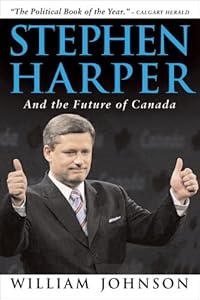
"What drove him into politics was indignation, outrage," argues commentator William Johnson, who has written a biography called Stephen Harper and the Future of Canada. It was ideology, not love of the game, that Mr. Johnson believes pushed Mr. Harper into public life.
"One thing that I would say about him, with great conviction, is that he's a straight arrow," Mr. Johnson believes. "What you see is what you get. He's not good at acting or pretending. He doesn't weep with widows and hug every orphan in sight, and he won't wear a hundred hearts on his sleeve. By character and by principle he opposes all the photo ops and false sentiments" that are part of political theatre.- Who is Stephen Harper?
Stephen Harper grew unhappy with political culture of several parties and with the help of many reshaped the political landscape in Canada.
Peter MacKay
In March 2002 Stephen Harper beat Stockwell Day to lead the Canadian Alliance. Within 18 months he merged the PC with Canadian Alliance to form the Conservative Party of Canada by beating Belinda Stronach and Tony Clement on March 20, 2004.
On May 23, 2004, Governor General Adrienne Clarkson, on the advice of Martin, ordered the dissolution of the House of Commons. Following a 36-day campaign, voters elected 308 Members of the House of Commons. 
History in the making a slow romance with Ontario playing hard to get.
Canada Day PM Stephen Harper
The 2006 Canadian federal election (more formally, the 39th General Election) was held on January 23, 2006, to elect members of the Canadian House of Commons of the 39th Parliament of Canada. The Conservative Party of Canada won the greatest number of seats: 40.3% of seats, or 124 out of 308, up from 99 seats in 2004, and 36.3% of votes: up from 29.6% in the 2004 election. The election resulted in a minority government led by the Conservative Party with Stephen Harper becoming the 22nd Prime Minister of Canada. By proportion of seats, this was Canada's smallest minority government since Confederation. Despite this it was the longest serving minority government led by a party other than the Liberal Party of Canada, and the third longest serving minority government overall.
In 2008 Canadian federal election (40th General Election) was held on on Tuesday October 14, 2008. The Conservative Government were able to pick up an additional 19 seats, Liberals gave up 26 seats, Separatist  lost 2,  and the NDP picked up 8 additional seats. The Green Party gain no seats but make tremendous gains with raw votes.
In November of 2008 the conservatives tried in their economic update to stop the flow of taxpayers money in excess of $ 10 million per year to their own political party war-chest but the coalition led by Dion, endorsed by all opposition political party leaders demanded the political subsidy remain and it was undemocratic to remove it. They were threatening an election over it.
The Conservative Party of Canada has been able to raise $ 147,594,561 without the Liberal Campaign Reform changes. If you include the subsidy they have earned through various revenue streams nearly $ 250 million since 2004.
  • In 2006 the Bloc and NDP took turns passing the Conservative Party of Canada's Agenda.
  • In January 2009 the Liberals abandoned their coalition in order support Stephen Harper.
  • In September 2009 Jack Layton did the same.
  • In 2010 we have at least thirty Liberal MPs who are unable to show up, whipped not, to vote against Stephen Harper Conservative Party of Canada Agenda.
  • This summer Ignatieff spent his summer dancing, talking about his unrequited love for the Conservative Agenda and visiting friends asking for money. The Liberal Express summer bus tour has been a flop, according to a new Leger Marketing poll.
  
h/t/Pundits Guide Party Financing.
The Harper Govt accomplishments here
Enhanced by Zemanta

Friday, August 20, 2010

East Coast Campaign: No Dancing Required

A big difference between the leaders is the rush to judgment and waiting for the facts. We have seen this play out for the media and the opposition parties on a number of issues.
"...last December, the Conservative government financed 20 per cent of Dresdell’s project to the tune of a $1.1-million two-year interest-free loan, just one of the fiscal stimulus measures of its Economic Action Plan. “Tourism contributes significantly to the socioeconomic development of Quebec’s regions and the well-being of their residents,” said Conservative MP Denis Lebel Minister of State (Economic Development Agency of Canada for the Regions of Quebec)at the time. Denis Lebel took back his seat from the Quebec French Separatist Party (The Bloc) in 2007. The Bloc held this seat from 1993-2007.
Dresdell says he needed the government money to get him through the first lean years. “You try to fill a 100-room hotel with just tourists in the first year,” he says. Roughly 50 per cent of the hotel is currently rented to workers from the Hydro-Québec project, he says; though he expects tourist traffic to pick up in the next two or three years. “I’m a businessman, and as a businessman I’m here to fill up my hotel rooms. Of course I’m going to use my contacts to try and get business.”  -Stimulus
-------------------------------------------------------------------------
Prime Minister Stephen Harper strode up to a podium yesterday morning at the Rodd Miramichi River Hotel and just a few words into his speech, the smiles seen on the faces of the dozens of people in the room told the story.
A lot of jobs are coming to the Miramichi in the next few years: real jobs, federal jobs, secure jobs, and jobs that will pay a lot of money.
Harper said a new centre under the management of the federal Department of Public Works and Government Services Canada will employ 550 people who will manage salary and payroll services for some 300,000 federal employees across Canada by 2015-16.
"You will be able to find a job here in Miramichi," Harper said. "A city that anyone would love to live in." -
The Prime Minister said the $298-million initiative will save taxpayers over $80 million annually once start-up costs are recouped.
After the press conference, Miramichi Mayor Gerry Cormier went so far as to dance a jig in celebration of what he called the best news he has heard in what seems like forever - Times & Transcript
--------------------------------------------------------------
LUNENBURG — Prime Minister Steven Harper stopped by Wednesday to tell Nova Sco­tians he’s backing the nearly $15-million restoration of Bluenose II to the tune of $4.9 million. - CH

--------------------------------------------------------------------
Moncton, New Brunswick - Prime Minister Stephen Harper today participated in the opening ceremonies of the 13th International Association of Athletics Federations (IAAF) World Junior Championships in Athletics in Moncton, New Brunswick. He was joined by Gary Lunn, Minister of State (Sport).
--------------------------------------------------------------------------------------
If you like, you can always watch the official opposition leader audition for Think You Can Dance Canada. Here is a cheap shot by Ignatieff on Helena, her husband and our Minister of Finance.
Enhanced by Zemanta

Wednesday, May 12, 2010

Parliament: Rewriting History Canadian Media on Hiatus

Perception vs Reality
Our media is failing to dig for substance, they have become part of the larger problem. How many stories on the Prime Minister arriving late for a photo? Anyone see a Canadian media outlet challenge the opposition party on the facts and fairy tales in Question Period?
The purpose of Question Period is to ask the Government questions about issues that are important, topical and to hold the government to account for decision taken or not taken. Is the Canadian media covering the events in Question Period in a neutral fashion or do they have their own agenda?
We have forty-nine Separatists demand their voice be heard. These Separatists demand Canada respect their demands of allowing Quebec to secede by playing the victim card. These forty-nine separatist ignore the results of two referendums. The Separatists earned 65% of the seats  in 2008 with only 38.1% the popular support in Quebec. The Separatists have no problem in demanding their minority voice represents the majority interest in retaining an imbalance of seats in the federal parliament. The Separatists have no difficulty in demanding the majority of Canadians stop progress, plans to adopt a national regulator or balance their books if it impacts on their interests. These Separatists have NEVER won the support of the majority in Quebec voters but they regularly stand up and accuse the federalist Members of Parliament in Quebec as voting against the best interest of Quebec. How does our Canadian media refer to the 38% popular vote in Quebec for the Separatists? Can you find an analysis of these riding and Bloc support? Where do the Separatists have the most of their support and seats? The Bloc with 87% are the most dependent on the political party subsidy welfare from the taxpayer compliments of the Chretien Liberal majority. The Liberals are next in reliance of the welfare from taxpayers.
Quebec is the largest beneficiary of the Federalist welfare. The majority of the federal government welfare has been on backs Ontario and Alberta. If you are paying the bills to keep the lights on in Quebec, are you not entitled to make the decision? The Separatists don't think so, they believe they are entitled to more money and powers. The population of Quebec is not growing as fast as Ontario, Alberta or British Columbia. Instead of allowing the other provinces to add seats the Separatists have chosen to play the victim. Quebec has been a taken the lion-share of equalization payments since the program was developed.
  • In November 2008 the Lib-Dem formed a coalition signed the Accord. It agreed to give these Separatists a veto, balance of power during the worst global recession as the total number of Lib-Dem MPs were not greater than the six week old government. The deal was to last until June 2011.
  • Brian Topp author, ex-NDP strategist explained how this secret deal was in place months ago and was not the same as alleged by coalition leaders.
  • Brian Topp has not been sued by the opposition leaders to correct his statements on the details.
  • Anyone from the media inquire with this revelation the secret deal was in place months before the election?
The NDP earn more votes than the Separatists but send less MPs to parliament. The NDP have agreed with the Separatists giving Quebec an unfair representation against Ontario, Alberta and British Columbia. The Democrats hold one seat, they have never been a credible force in Quebec. The Democrats are the closest in ideology with the separatists on social issues. The Democrats regularly vote against expanding global free trade, combat missions. They look to the Robin Hood School of economics theory.  The NDP seem to get alot of support from Public Unions. These Unions will be asked to make some freeze or reduce their entitlements in dealing with the deficit. Can you guess how much energy the NDP will expend in defending these Public Unions?
The Liberals have had the biggest hill to climb in regaining credibility since their loss of power under Martin in 2006. They have failed to make significant inroads with the grassroots to open their wallets, key demographics, winning support outside their pockets in three of the largest cities. In 2008 the Liberal support in Ontario retreated again. This was a historic low that was not seen since confederation. The problems of the Liberal Party , fall from grace as the natural governing party has many theories. The Big Tent Party are polling 1-3% above their historic 2008 collapse. Is this the new normal?
  • Inter-cine: Trudeau-Turner-Chretien-Martin-Dion-Ignatieff
  • Nasty Television Ads
  • RCMP investigation on Income Trusts
  • Financial Strength, Organization discipline
  • Platform, Vision, Trust
  • Roman Catholic, Female, Visible minorities, Rural voters
It is not difficult to understand the lack of success from the official opposition Liberals since losing power in 2006. The executive rejected the risk of the grassroots upsetting their an appointment of a leader who was defeated by Dion. The current leader did not win a democratic race in his own riding. Ignatieff was parachuted into a safe Liberal seat, his opportunism pushed the female Liberal MP out. They have not chosen to listen, represent the interest of regular voters. They have chosen along with the fringe parties to play political games with a cultural war in pitting region against region.
The world is moving ahead, Spanish PM Jose Luis Rodriguez Zapatero announced a 5% cut to public sector salaries, as well as reductions to pensions and regional government funding.-BBC News
Have the opposition parties united behind opening their expenses to the public? Have they participated in calls for restraint in growth of government programs?
Stockwell Day has been put in charge to find savings in every department including Parliament. Are the opposition parties interested in following the example of other governments?
Treasury Board President Stockwell Day announced Monday that Industry Canada and regional development agencies for Atlantic Canada, Quebec and the West will be among 13 departments required to shave 5 per cent from their budgets this year. -G&M
Will the opposition continue to frame these re-balancing of priorities as radical, ideological as part of the cultural war narrative? What part is the Canadian media playing?
Enhanced by Zemanta

Monday, May 03, 2010

Senator Nancy Ruth: Speaks Truth To Power

Ottawa reception at the Métropolitain Brasserie & Restaurant, Equal Voice Acting National Chair Donna Dasko thanked party leaders for their work in advancing women in politics. $ 1.2 million on Feb 2009.
Enough of the political games! Nancy Ruth is a Conservative Senator, she understands the dangerous game played by the relentless fighting in Ottawa. She is speaking truth to power. She is not mincing words. Audio here.

“We’ve got five weeks or whatever left until G-8 starts. Shut the f--- up on this issue,”
“If you push it, there will be more backlash,” said Ruth, who fears that outrage will push her boss, Prime Minister Stephen Harper, to take further measures against abortion and family planning – abroad, or maybe even in Canada. “This is now a political football. This is not about women’s health in this country.” - -Toronto Star May 3, 2010
Ruth was appointed to the Senate as an Independent in 2005 by Liberal Prime Minister Paul Martin, but joined the Conservative caucus a year later.  She says she has never felt any awkwardness about the fact she is gay from Prime Minister Stephen Harper or any of his staff. "It just isn't an issue. I'm first and foremost a women's rights activist." - CBC May 10, 2009

Enhanced by Zemanta